
news & updates
news & updates
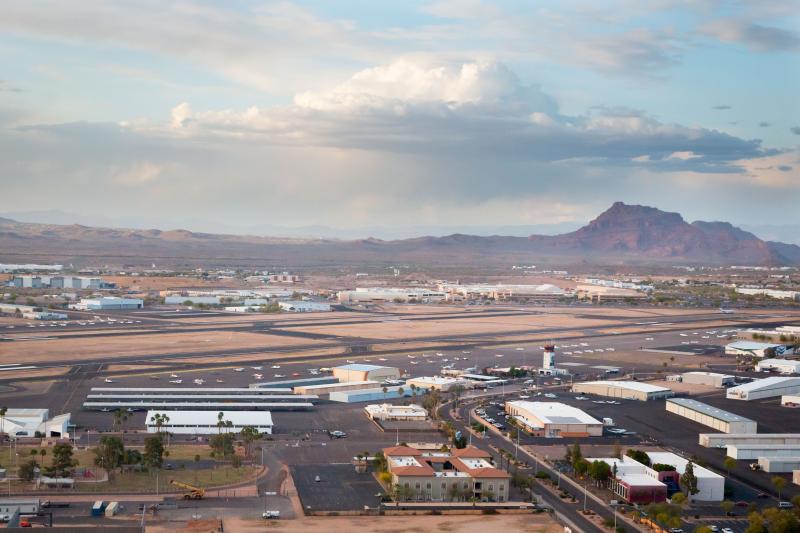
Falcon Field Airport received more than $1.7 million in Federal Aviation Administration (FAA) grants to support infrastructure and safety improvements during fiscal year 2026-27. The federal funding will help reconstruct a critical airport service road, construct a new taxiway connection and holding bay and equip City vehicles with technology that enhances safety around runways and taxiways.
More than $819,000 will support reconstruction of the West Airport Service Road, an important vehicle route connecting the north and south sides of Falcon Field within the airport perimeter. The improvements will provide a reliable route for authorized vehicles to travel airport facilities without entering active aircraft movement zones.
The FAA awarded $519,298 for the project through the Infrastructure Investment and Jobs Act (IIJA) and an additional $300,000 through its Airport Improvement Program.
An additional $823,243 from the FAA's Airport Improvement Program will fund the construction of a new Taxiway near Runway 22L.The project will provide direct access between an existing aircraft parking ramp and Taxiway D while preparing the area for a future aircraft holding bay.
The planned holding bay, which will require additional funding, will provide a designated location for aircraft to conduct preflight run-up procedures before departure. Once completed, it is expected to improve aircraft flow and reduce congestion during peak operating periods. Both improvements were identified in the Falcon Field Master Plan.
Falcon Field also received a $67,742 FAA Airport Improvement Program grant to purchase and install 12 Vehicle Movement Area Transmitters in select Airport and Mesa Fire and Medical Department vehicles operating on the airfield.
The transmitters will build upon FAA surface-awareness technology installed at Falcon Field in 2025, allowing air traffic controllers to better track equipped vehicles near runways and taxiways. Falcon Field is among the first general aviation airports in the country to receive this technology as part of the FAA's Surface Awareness Initiative, a national effort to improve situational awareness and reduce the risk of ground-movement incidents.
Together, these federal investments will support Falcon Field's continued development, strengthen critical airport infrastructure and enhance safety and efficiency for aircraft and ground operations.